Overview
Rumi Schools was conceived as a social impact initiative aimed at transforming rural education in India. The project envisioned working with existing government schools in rural areas to supplement the education system with better quality resources, enabling students to develop skillsets across academics, co-curricular activities, and essential life skills.
This initiative was designed as the first step toward a more ambitious "Model Village" vision—hundreds of sustainable rural communities across India with modernized agriculture, improved healthcare, traditional arts preservation, and eco-tourism. The education component was identified as the critical foundation for this larger transformation.
The Challenge
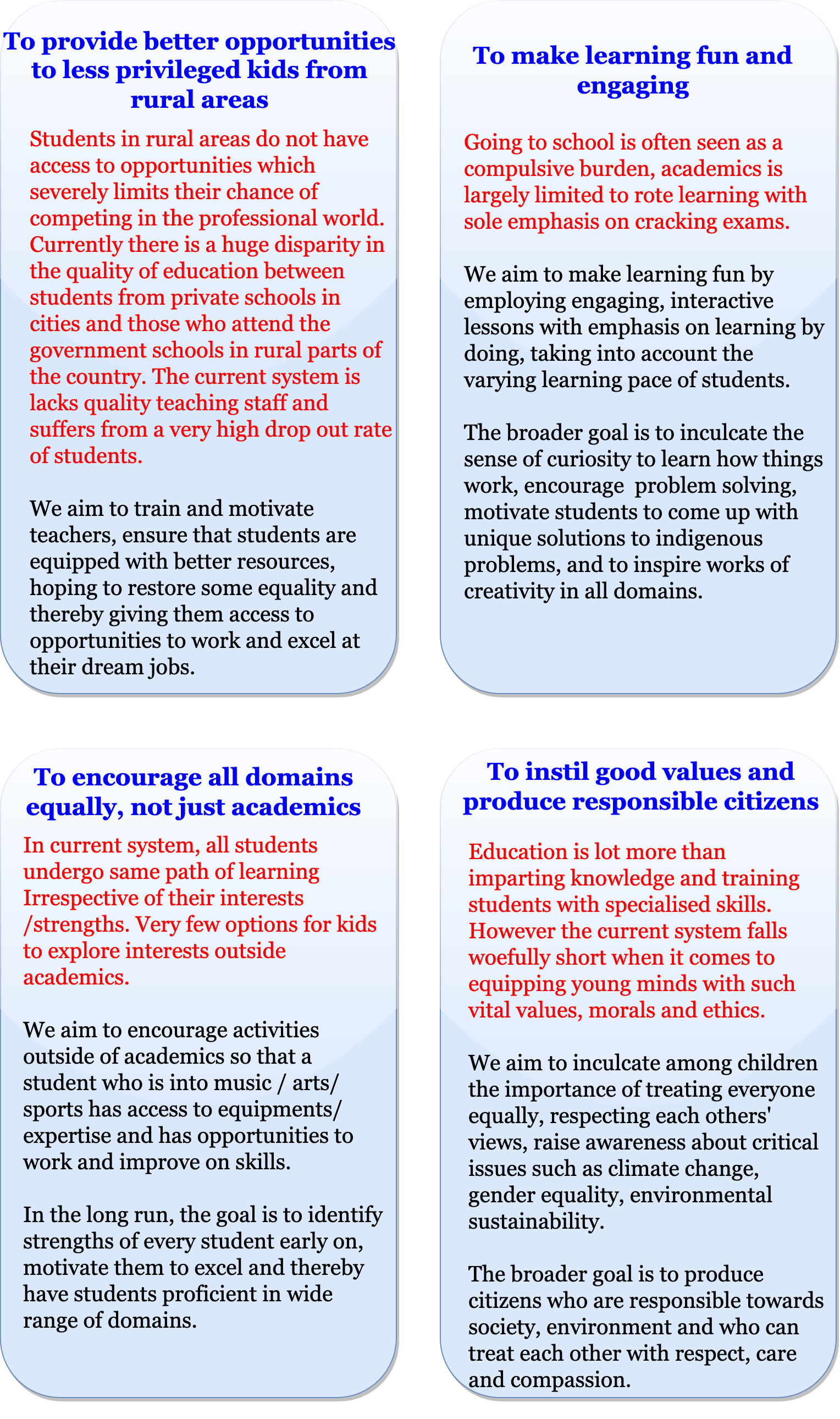
The initiative was born from observing four critical gaps in rural education:
1. Limited Opportunities for Rural Students
Students in rural government schools face significant disadvantages compared to their urban, private-school counterparts. The disparity includes:
- Lack of access to quality educational resources
- Insufficient teaching staff and high dropout rates
- Limited exposure to opportunities beyond their immediate environment
The Goal: Train and motivate teachers, equip students with better learning materials, and provide pathways to excel across multiple domains and pursue diverse careers.
2. Rote Learning Over Engagement
The traditional education system often reduces learning to a compulsory burden, with excessive emphasis on exam performance rather than genuine understanding and curiosity.
The Goal: Transform learning into an engaging experience through interactive, problem-based methodologies. Foster curiosity, hands-on exploration, creative problem-solving, and innovative thinking—skills essential for addressing local and global challenges.
3. Academic-Only Focus
The existing system offers limited opportunities for students to explore interests and talents outside traditional academic subjects, regardless of individual passions or aptitudes.
The Goal: Create equal opportunities across multiple domains—arts, sports, technology, performing arts—and identify each student's unique strengths. Provide mentorship and resources to help talented individuals excel in their chosen fields.
4. Missing Values Education
While the current system focuses heavily on specialized knowledge, it often fails to develop well-rounded, socially conscious individuals.
The Goal: Cultivate responsible citizens who understand inclusivity, environmental sustainability, gender equality, and social responsibility. Build a generation capable of treating others with respect, care, and equality while addressing pressing environmental concerns.
The Vision
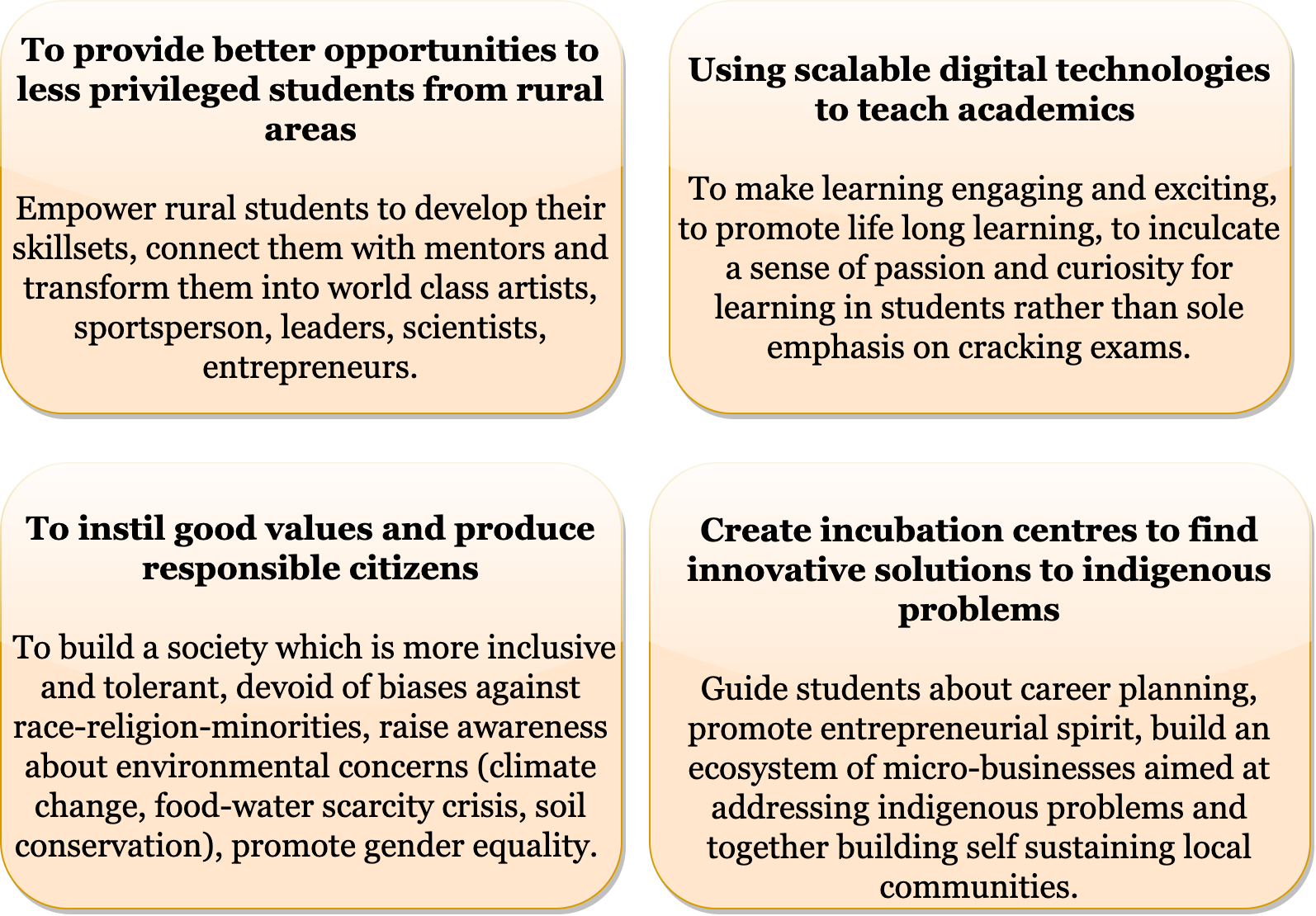
The initiative was built on four core objectives:
1. Empowering Rural Students
Transform less privileged students from rural areas into world-class artists, sportspersons, leaders, scientists, and entrepreneurs by connecting them with mentors and development opportunities.
2. Scalable Digital Education
Leverage digital technologies and innovative teaching methodologies to make learning engaging, exciting, and focused on life-long curiosity rather than just exam success.
3. Building Responsible Citizens
Foster a more inclusive and tolerant society, free from biases related to race, religion, or gender. Raise awareness about critical environmental challenges including climate change, water scarcity, soil conservation, and sustainable living.
4. Innovation Hubs for Local Solutions
Guide students in career planning and entrepreneurship, helping build an ecosystem of micro-businesses that address indigenous problems and create self-sustaining local communities.
Proposed Solution
Three Educational Pillars
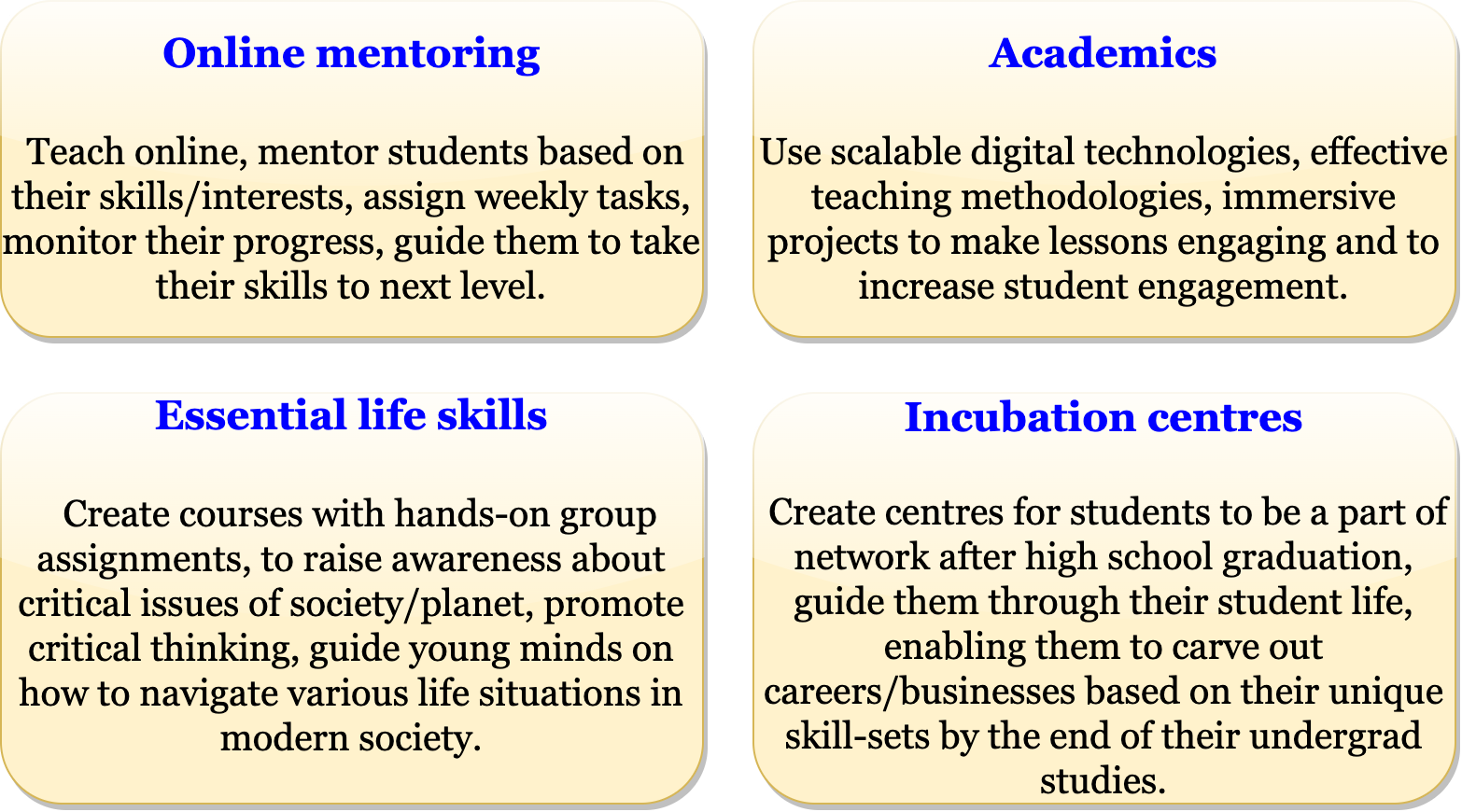
The program was structured around three interconnected pillars:
1. Academics
Innovative digital technologies and teaching methodologies designed to inculcate passion and curiosity for learning.
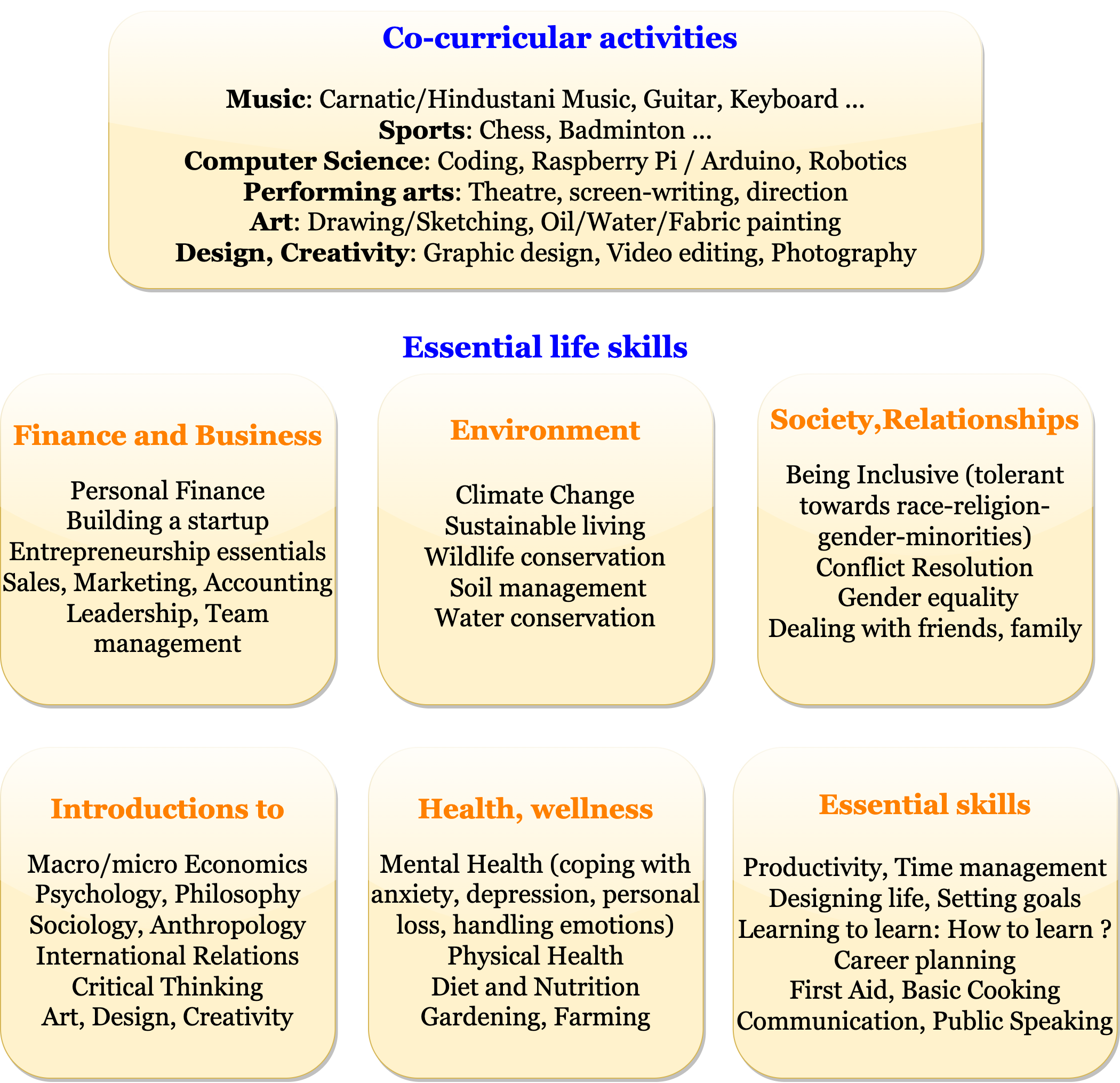
2. Co-curricular Activities
- Technology: Coding, Raspberry Pi/Arduino, Robotics
- Music: Carnatic/Hindustani Music, Guitar, Keyboard
- Sports: Chess, Badminton
- Visual Arts: Drawing, Sketching, Painting (Oil/Water/Fabric)
- Design: Graphic design, Video editing, Photography
- Performing Arts: Theatre, Screenwriting, Direction
- Wellness: Yoga and mind-body practices
3. Essential Life Skills
- Social awareness, morals, ethics, and inclusiveness
- Personal finance and business fundamentals
- Relationships and social dynamics
- Health, wellness, and mental health
- Environmental consciousness and sustainability
Program Implementation Model
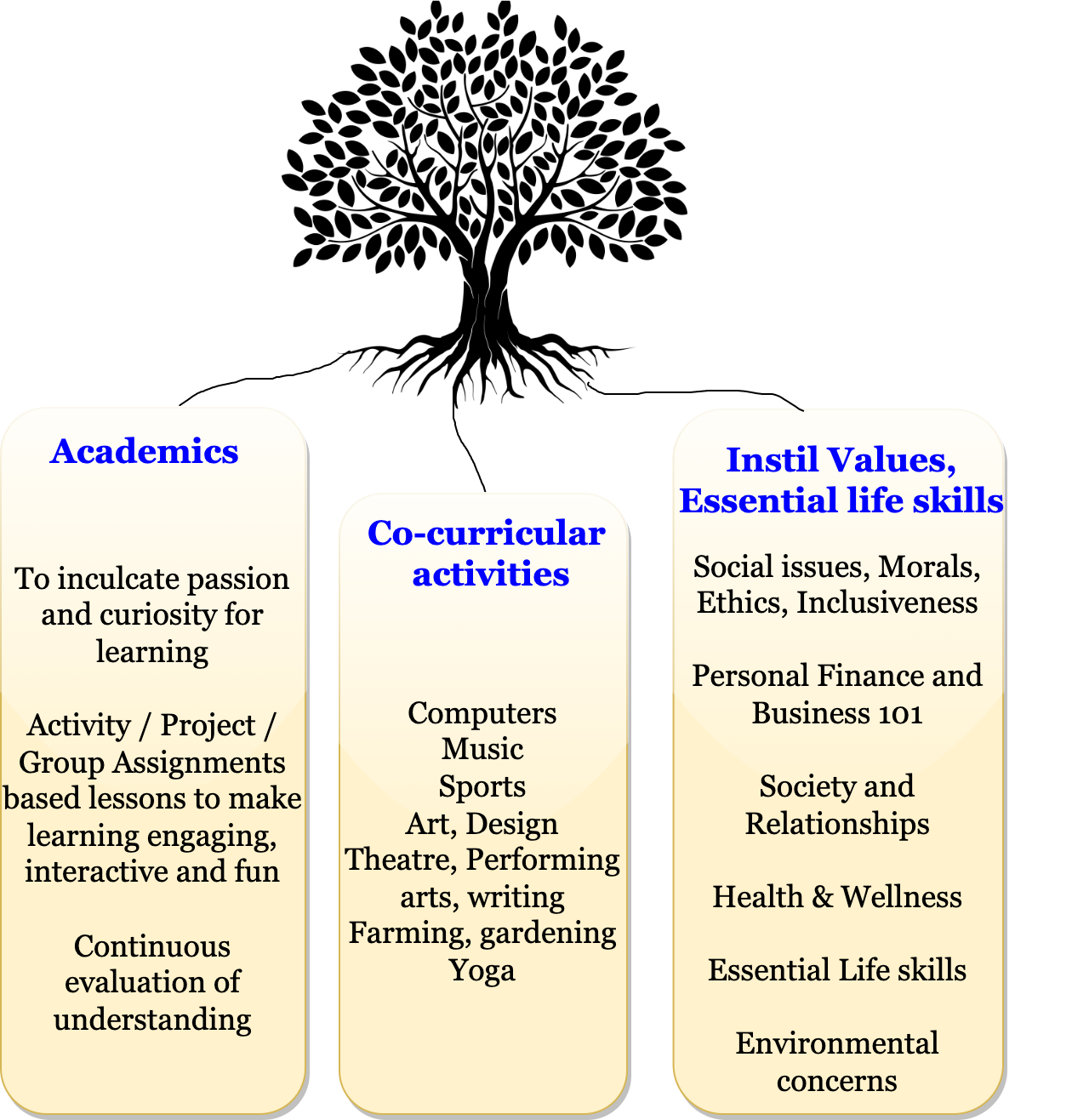
The initiative planned four key program areas:
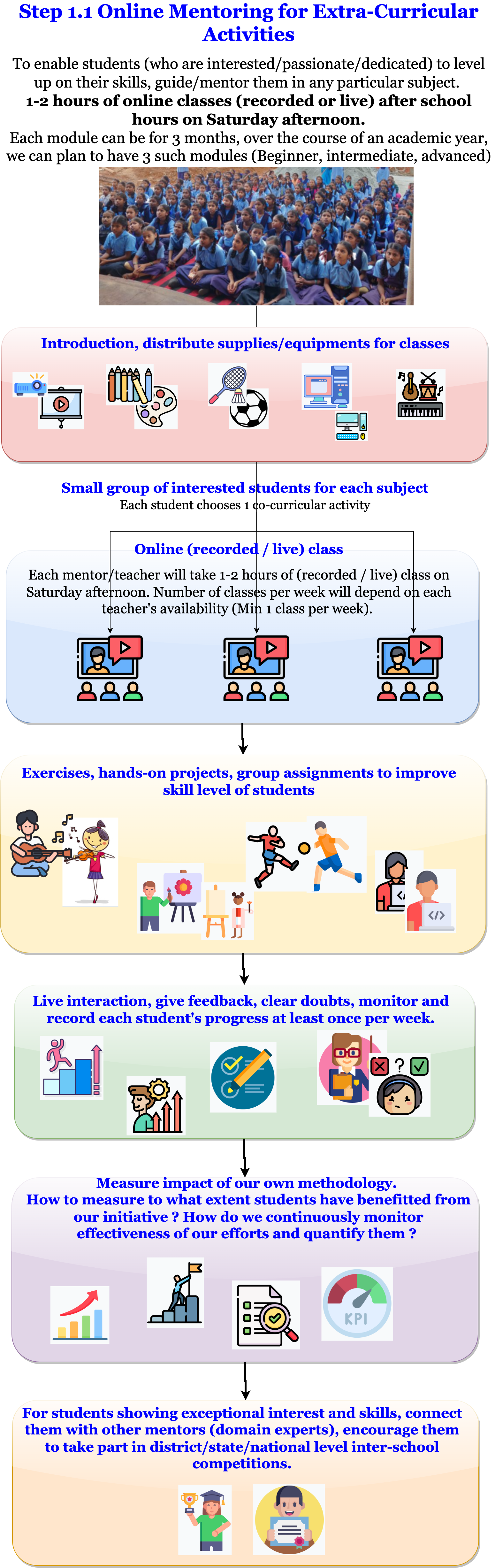
Online Mentoring
- Remote teaching tailored to individual student skills and interests
- Weekly task assignments with progress monitoring
- Personalized guidance to advance skill development
Academic Innovation
- Scalable digital technologies integrated with effective teaching methods
- Project-based learning to make lessons engaging
- Focus on fostering genuine passion for learning
Life Skills Development
- Assignments addressing critical societal and environmental issues
- Guidance on navigating modern society
- Frameworks for ethical decision-making
Incubation Centers
- Post-graduation support networks
- Career guidance and entrepreneurship mentorship
- Platforms for discovering creative and business opportunities aligned with individual strengths
Comprehensive Curriculum
Implementation Strategy
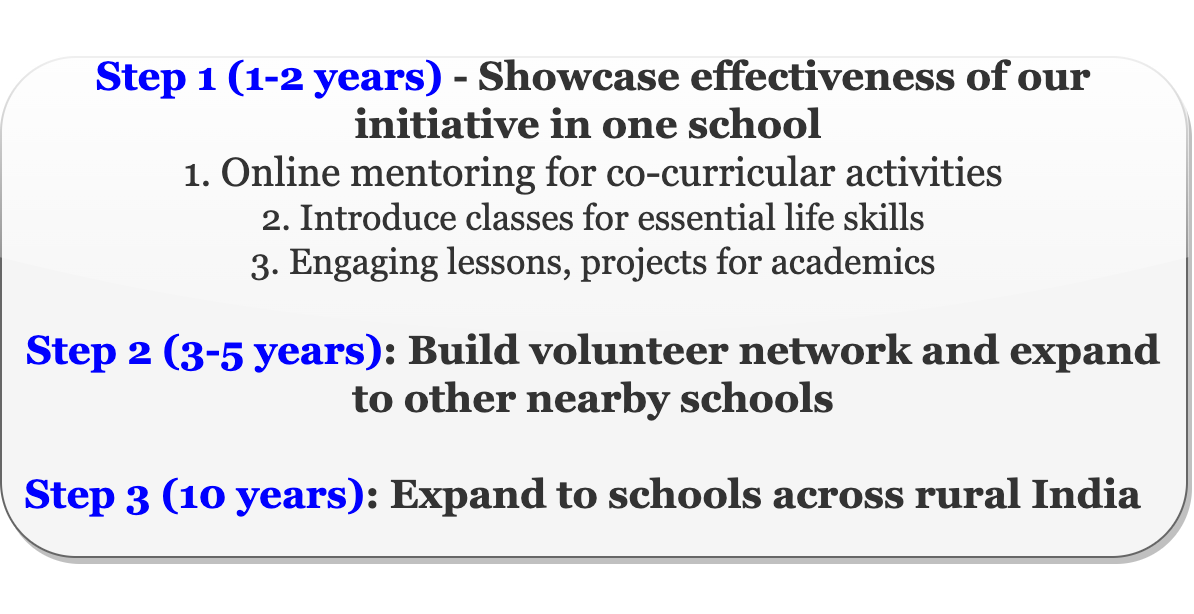
Phased Rollout Plan
Operational Methodology
Project Scope & Requirements
The Bigger Picture: Model Village
This education initiative was envisioned as the foundation of a larger "Model Village" concept with multiple integrated components:
- Agriculture: Modernization and sustainable farming practices
- Healthcare: Improved access and quality of medical services
- Community: Building sustainable, self-sufficient communities
- Culture: Preservation and promotion of traditional arts and crafts
- Environment: Waste management and eco-tourism initiatives
The belief was that transforming education would create the human capital necessary to drive improvements across all other sectors.
Target Location
Initial discussions centered on a government school in Kalasa village, Chikmagalur district, Karnataka. The vision was to prove the concept there before expanding to hundreds of schools across rural India.
Resource Requirements
The project required:
- Educators: Passionate teachers skilled in various domains
- Mentors: Professionals willing to guide students remotely
- Course Creators: Experts to design engaging, innovative curricula
- Operations Team: Coordinators for logistics and school partnerships
- Technology: Digital platforms, equipment, and learning tools
- Funding: Initial bootstrap for pilot, with plans to explore grants and partnerships for scaling
Current Status
Status: On Hold
The Rumi Schools initiative is currently paused. While the vision and planning were extensive, the project has been placed on hold to allow focus on other professional priorities and ventures.
The detailed curriculum, methodology, and implementation strategy represent significant research and planning work. The core vision—making quality education accessible to rural students through scalable digital solutions—remains relevant and impactful.
Future Possibilities
The project is open to:
- Partnerships: Collaboration with NGOs, educational institutions, or government programs working in rural education
- Reactivation: Potential to restart with proper funding, team, and timing
- Knowledge Sharing: The frameworks and curriculum designs could benefit similar initiatives
- Pilot Programs: Testing specific components (e.g., life skills modules, online mentoring) in existing programs
Key Learnings
Design Insights
- Scalability First: Digital-first approach was crucial for reaching remote areas
- Holistic Development: Equal emphasis on academics, skills, and values resonated with stakeholders
- Local Context: Solutions needed to address indigenous problems and cultural contexts
- Teacher Empowerment: Success depended heavily on training and motivating local educators
Implementation Challenges
- Resource Intensity: High coordination, technology, and human resource requirements
- Sustained Commitment: Long-term impact requires multi-year engagement
- Stakeholder Alignment: Coordination with schools, government, and community leaders
- Measurement: Defining and tracking impact metrics for holistic education
Transferable Value
The frameworks developed for curriculum design, teacher training, and life skills education could benefit other social impact initiatives in education, rural development, or community empowerment sectors.
Dedicated to Rumi, an epitome of love 💚