Overview
Spiticart was conceived as an e-commerce platform aimed at delivering diversity from across India - a marketplace showcasing India's rich heritage of arts, handicrafts, and unique rural products while empowering rural artisans by improving their livelihoods.
The platform was built on the belief that India's vast informal sector of artisans, craftsmen, and small business owners—employing lakhs of people from poor rural backgrounds—had been largely neglected in the e-commerce boom dominated by multinationals and mass manufacturers.
The Challenge
The Problem We Aimed to Solve
The last few years saw tremendous growth in the e-commerce space in India. However, a small group of multinationals, mass manufacturers, and leading companies captured a vast majority of this growth, leaving behind a huge sector:
- Small business owners struggling to reach online customers
- Rural artisans and craftsmen with limited market access
- Traditional Indian products overshadowed by mass-produced items
- Age-old crafts at risk of being lost and forgotten
Despite India's rich cultural heritage—home to the Indus Valley civilization, Mauryas, Cholas, Vijayanagara empires, and the Mughal era—today's generation was barely aware of these art and craft forms. Many traditional crafts were largely lost and forgotten during the colonial era.
The Vision
Spiticart was founded with three core objectives:
1. Delivering Diverse and Unique Products from Across India
Create a platform to showcase traditional Indian products, arts, and handicrafts that were being overlooked in the modern e-commerce landscape.
2. Promoting India's Rich Heritage of Arts and Handicrafts
Revive interest in traditional craft forms and preserve age-old techniques that were being neglected in the era of fast fashion and cheap mass-manufactured products.
Key Belief: As the new generation of India, we should proudly promote our rich cultural heritage and bring back many of these neglected crafts from across the length and breadth of the nation.
3. Empowering Rural Artisans by Improving Their Livelihoods
Support artisans who often come from poor backgrounds and work long hours to earn daily wages. Every purchase was envisioned as a small step toward improving their lives.
Product Focus
The platform curated and showcased traditional Indian handicrafts from various regions:
Channapatna Toys
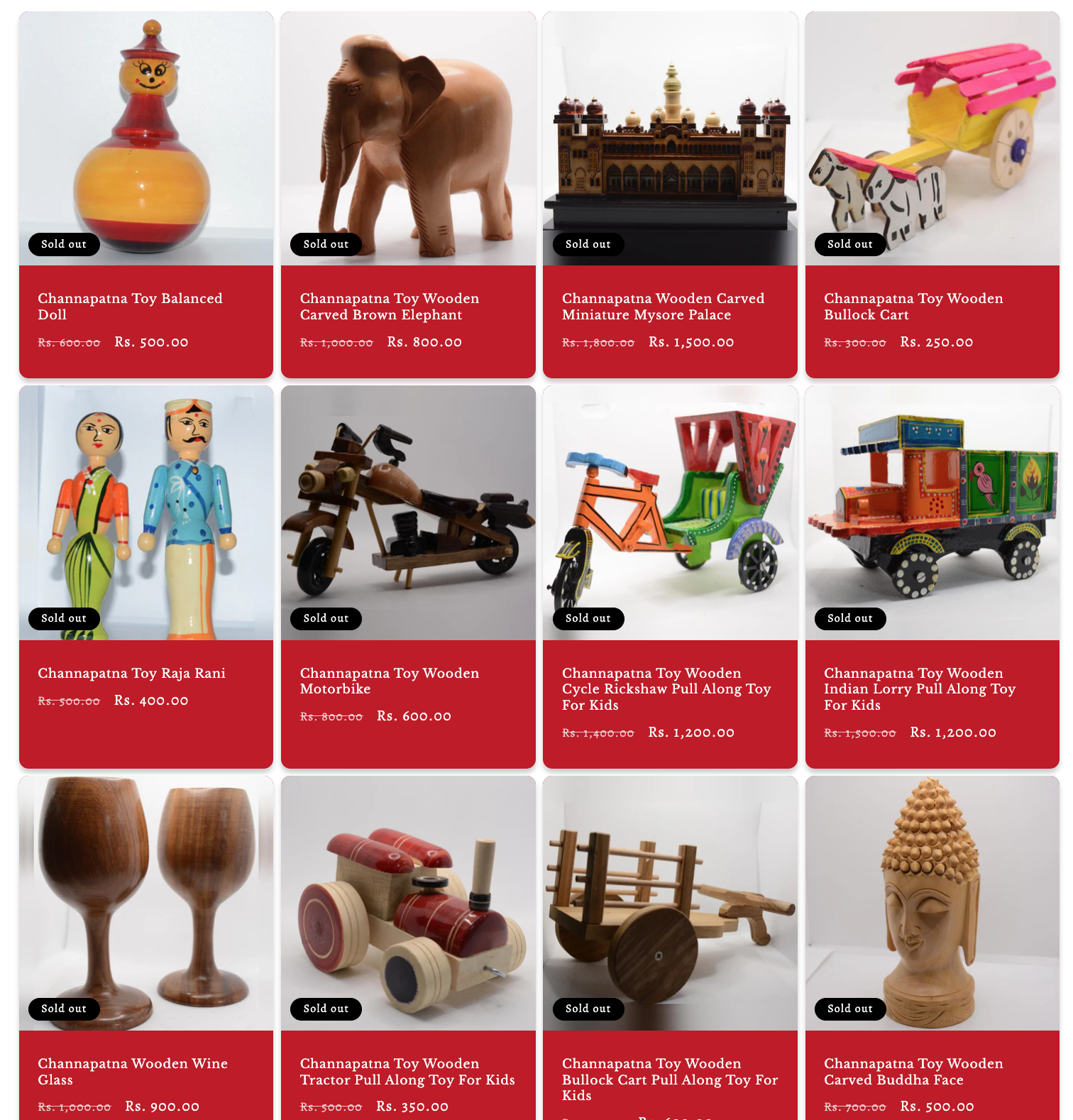
Traditional wooden toys from Karnataka, famous for their vibrant colors and eco-friendly lacquer coating. These handcrafted toys represent centuries-old craftsmanship passed down through generations.
Agra Marble Carvings
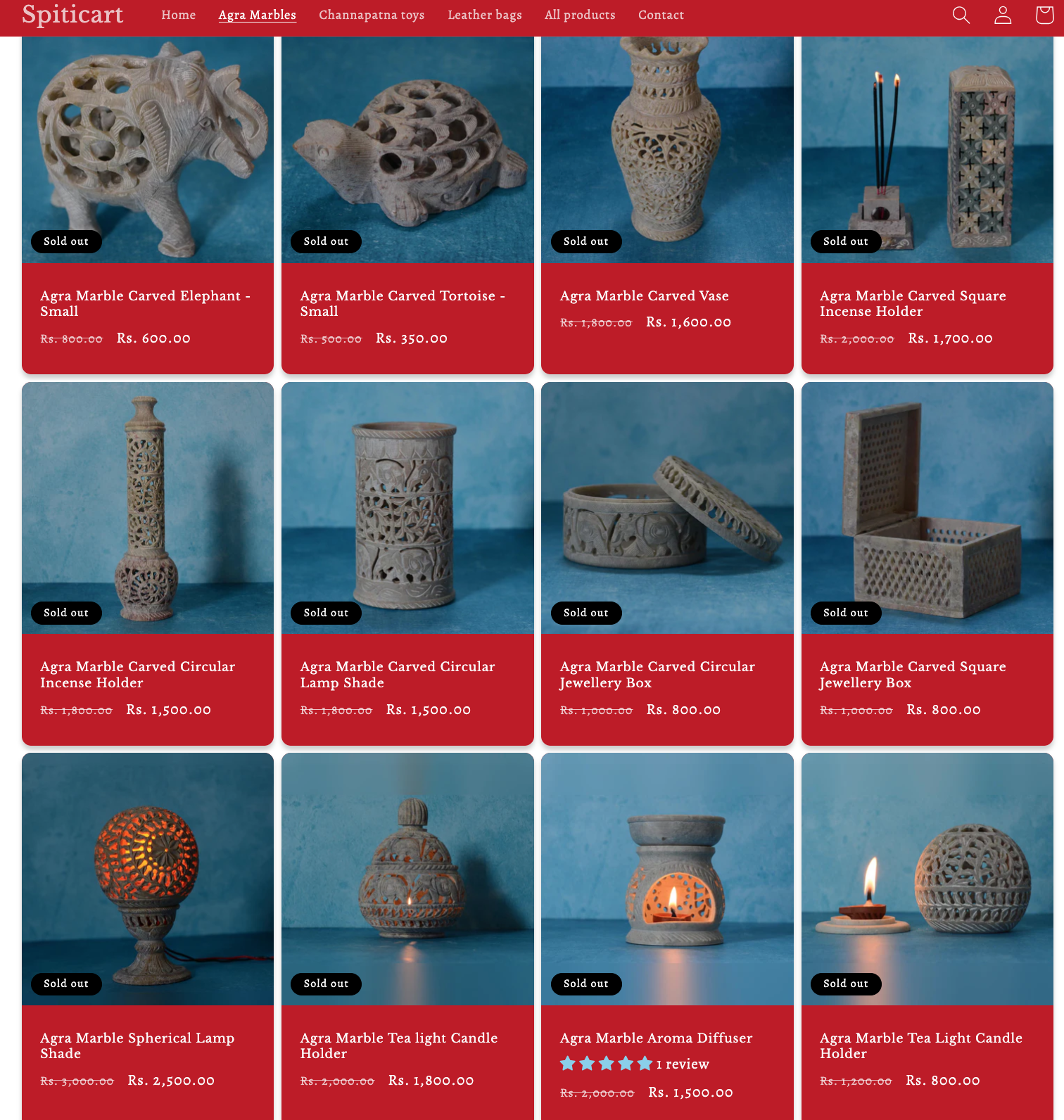
Intricate marble inlay work from Agra, continuing the artistic legacy of Mughal-era craftsmanship. Each piece showcases the skilled artistry of marble craftsmen.
The Artisan-Centric Approach
Keeping Artisans at the Heart
Philosophy: The artisans bring the amazing products to life. The goal was to share their hard work, dedication to craft, and leave a positive impact on their lives.
Impact on Rural Communities
The most heartwarming aspect of working on this venture was the interactions with the artisans. While it was heartening to see craftsmen preserving age-old techniques, it was also dispiriting to learn about their financial hardships and extremely challenging lives.
Primary Goal: Help improve the livelihoods of artisans employed in traditional crafts like Shantiniketan leather, Channapatna toys, and marble carvings. The vision was that widespread adoption of these products in Indian households would empower artisans through economic opportunity.
Business Model
Direct-to-Consumer E-commerce
- Online marketplace connecting rural artisans directly with customers
- Curated selection of authentic, handcrafted products
- Focus on quality, authenticity, and storytelling
- Educational content about craft heritage and artisan stories
Value Proposition
For Customers:
- Access to unique, authentic Indian handicrafts
- Support traditional arts and rural communities
- High-quality, handcrafted products with cultural significance
For Artisans:
- Direct market access without intermediaries
- Fair pricing and better profit margins
- Platform to showcase their craft to wider audience
- Economic empowerment and livelihood improvement
Current Status
Status: On Hold
The Spiticart platform is currently on hold. The venture successfully showcased the potential of traditional Indian handicrafts in the e-commerce space and demonstrated the viability of an artisan-centric business model.
The website remains accessible at spiticart.com, serving as a testament to the vision of preserving and promoting India's rich craft heritage.
Key Learnings
Market Insights
- Cultural Appreciation: Strong demand exists for authentic, handcrafted products with cultural significance
- Storytelling Matters: Customers value knowing the artisan stories and craft heritage behind products
- Quality Over Volume: Curated, high-quality products resonate better than mass inventory
Operational Challenges
- Supply Chain Complexity: Coordinating with rural artisans across different regions requires significant infrastructure
- Quality Consistency: Maintaining consistent quality standards while preserving handcrafted authenticity
- Logistics: Managing inventory, shipping, and returns for handcrafted products
- Artisan Education: Training artisans on quality standards, packaging, and business processes
Social Impact Insights
- Economic Empowerment: E-commerce can genuinely improve artisan livelihoods when executed properly
- Craft Preservation: Market access helps preserve traditional crafts at risk of being lost
- Generational Transfer: Creating economic viability encourages younger generations to continue traditional crafts
- Community Development: Supporting artisans has ripple effects on entire rural communities
Future Possibilities
The platform is open to:
- Partnerships: Collaboration with craft organizations, government initiatives, or impact investors
- Technology Integration: Exploring AI/ML for artisan matching, inventory management, and customer personalization
- Scale Expansion: Adding more craft categories and artisan communities
- Social Enterprise Model: Exploring hybrid models combining profit with social impact
- Export Opportunities: Taking Indian handicrafts to global markets
Transferable Value
The experience building Spiticart provided valuable insights into:
- Social Impact Business Models: Building ventures that balance profit with social good
- Rural Supply Chains: Managing logistics and quality in rural artisan ecosystems
- E-commerce Operations: End-to-end platform development, inventory, payments, and logistics
- Cultural Preservation: Using technology and business to preserve traditional heritage
- Stakeholder Management: Working with diverse stakeholders including artisans, suppliers, customers, and logistics partners
The frameworks and learnings could benefit other ventures in social commerce, handicrafts, rural entrepreneurship, or cultural preservation sectors.
Dedicated to the skilled artisans preserving India's rich craft heritage 🎨